

By Jaime Reyes | Reyes Home Lending | NMLS #2386261
Prepared for November 2026. Sources checked October 28, 2026.
Property readiness becomes practical when an unanswered question turns into a documented next step. “The roof needs attention” tells you very little about what happens next. A useful record identifies the concern, the work being considered, who will address it, when it should be finished and what evidence the lender needs to review.
That approach helps buyers evaluate a purchase, sellers prepare useful records and investors understand what stands between today’s property and its intended use. You do not need an elaborate system. One folder and a short worksheet can keep an estimate, a completed repair and a lender’s accepted documentation from being mistaken for the same thing.
Build a property readiness evidence file
Start with the property address, your intended use and the date you last updated the file. Add the available reports, disclosures, estimates, invoices and relevant project documents. Preserve the original documents and record who supplied them.
Use a separate worksheet for each unresolved concern. A single line saying “repairs” can hide several unrelated tasks with different providers and deadlines. Give each item a plain description and a status such as “needs evaluation,” “work planned,” “proof received” or “awaiting lender review.”
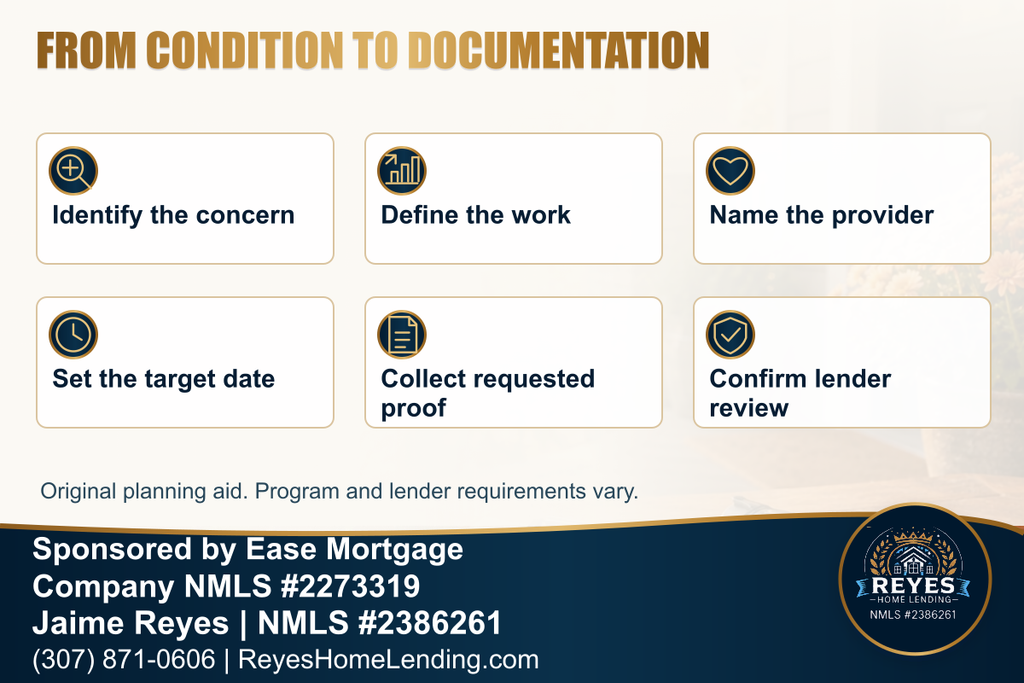
Move each concern through six clear steps
This is a practical organization method, not an agency form or a substitute for professional evaluation. For loans sold to Fannie Mae, its completion and postponed-improvement requirements distinguish types of work and acceptable verification methods. Exceptions have conditions. Your lender determines the applicable financing requirements and what proof it accepts; a post-closing repair arrangement is not automatically available.
- Identify the unresolved condition. Record what was reported and where the information came from. “Inspector recommended further evaluation of the heating system” is more useful than “heating is bad.” Keep an observation separate from a diagnosis that still requires a qualified professional.
- Define the work or next evaluation. Ask the appropriate inspector, contractor or specialist to describe the scope. If more investigation is needed before a repair can be specified, record that step first. Ask the lender which findings require action for the proposed financing.
- Name the responsible provider. Identify who will evaluate or perform the work, who will arrange access and who has agreed to pay. Use appropriately qualified professionals and confirm applicable licensing or permit requirements. A name on the worksheet records responsibility; it does not establish an agreement by itself.
- Set a realistic completion date. Ask about access, materials, permits and follow-up visits. For a build, identify which work and documents remain outstanding. Review contractual deadlines with your agent or attorney before relying on a target date.
- Collect the requested proof. Ask in advance whether the lender needs a completion report, photographs, invoices, an attestation or other evidence. These are questions, not interchangeable options you can select yourself. Keep the actual evidence with the corresponding worksheet.
- Confirm the lender’s response. Record when you submitted the documents and whether anything else is needed. Work being finished and documentation being accepted are separate milestones. Lender acceptance for financing does not certify the property’s legal compliance or guarantee its condition.
Copy this worksheet for each open item
Property address: __________
Intended use: __________
Last updated: __________
| Field | What to record |
|---|---|
| Unresolved condition | Description, report date and source: __________ |
| Required work or evaluation | Professional’s scope and lender’s stated condition, if any: __________ |
| Responsible provider | Name, contact, access arrangement and agreed payment responsibility: __________ |
| Completion date | Target date, dependencies and any required follow-up: __________ |
| Proof | Evidence requested, received and still missing: __________ |
| Lender acceptance | Submission date, response and remaining questions: __________ |
This is a blank planning tool, not an actual client file. Leave unknown answers visibly open instead of filling them with assumptions. If the scope or date changes, update the worksheet and keep the supporting record. Ask what needs another review when a material detail changes.
Add the right supporting inputs
An inspection and an appraisal answer different questions; keep both findings identifiable. The CFPB explains the distinction. Add specialist follow-up where appropriate rather than treating either report as a comprehensive guarantee.
For insurance, collect a property-specific quote and unresolved coverage questions; the CFPB suggests asking about prior damage and insurance availability. For a condo, add the association contact and documents requested for the lender’s applicable project review. Describe actual intended occupancy and existing leases so the lender can evaluate the appropriate occupancy requirements.
Put the evidence to work
Buyers: Bring the open items to the financing conversation before assuming that a negotiated repair credit resolves a property condition. Ask which items affect the proposed loan and what must happen next.
Sellers: Gather relevant repair invoices, permits, warranties and completion records you have. Work with your agent or attorney on required disclosures and any repair agreement. A worksheet does not change your contract or require either party to accept a proposal.
Investors: Separate “work finished” from “ready for the intended rental use.” Identify remaining professional, insurance or local requirements before relying on a projected move-in or rental start date.
Bring your property address and open questions to Reyes Home Lending. I can help compare available financing options around the property and your goals, while identifying what still needs a lender’s review. Call (307) 871-0606 or visit ReyesHomeLending.com.
Jaime Reyes | NMLS #2386261
Reyes Home Lending | Sponsored by Ease Mortgage
Company NMLS #2273319
(307) 871-0606 | ReyesHomeLending.com | EaseMortgage.com
For educational purposes. Eligibility and terms vary by loan program, lender, borrower and property. This article is not a commitment to lend.